BHS Manufacturer vs System Integrator — Which Should Airports Choose?
When an airport needs a new baggage handling system — whether for a brand new terminal or a full renovation — one of the first decisions procurement teams face is the choice between a BHS manufacturer vs system integrator?
The answer depends on the project scope, the airport's internal capabilities, and the level of control the airport wants over its supply chain. Here is what each model means in practice, and what airports should consider before signing a contract.
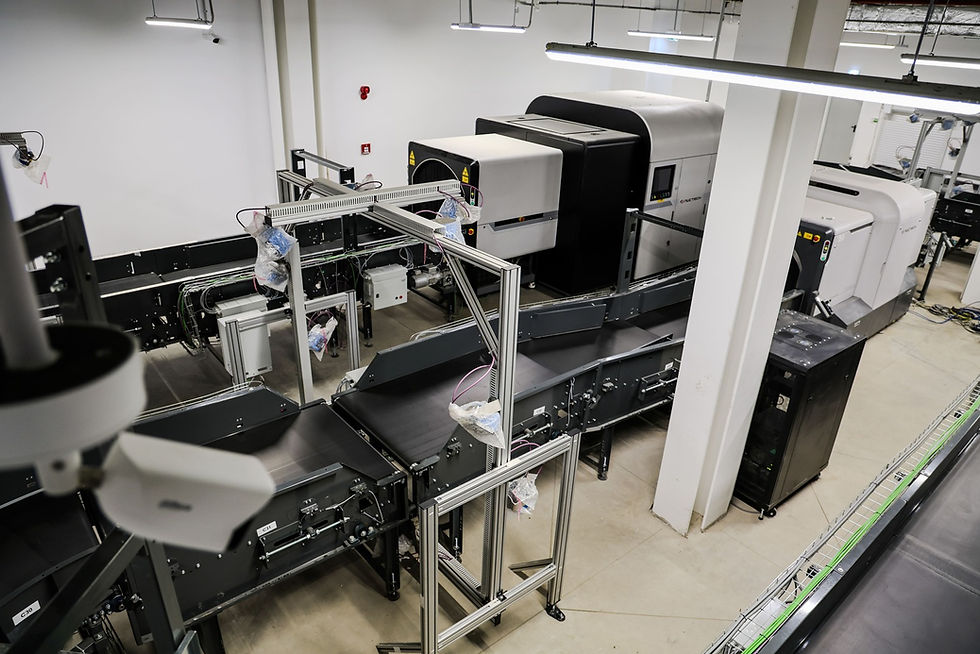
What is a BHS manufacturer?
A BHS manufacturer designs, produces, and delivers the physical components of a baggage handling system — conveyors, diverters, reclaim carousels, self-service bag drop units, tray return systems, and related terminal equipment — from its own factory.
In-house manufacturing means the airport is dealing directly with the company that built the equipment. There is no intermediary between the factory floor and the installation site. Factory pre-testing is carried out before delivery, reducing on-site commissioning time and the risk of integration failures.
A manufacturer with its own engineering team can also adapt designs to the specific constraints of each terminal — unusual layouts, low ceiling heights, limited floor space, or phased installation requirements.
What is a system integrator?
A system integrator does not manufacture equipment. Instead, it sources components from multiple suppliers and assembles them into a working system. The integrator's value lies in project management, software integration, and the ability to combine equipment from different manufacturers under a single contract.
For large-scale, highly complex BHS projects — such as major international hubs with millions of passengers — integrators play an important role, particularly where proprietary SCADA systems, DCV networks, or multi-vendor sortation software are required.
Key Differences: BHS Manufacturer vs System Integrator
Accountability: With a manufacturer, there is a single point of responsibility for the equipment — design, production, testing, and installation all sit with the same company. With an integrator, responsibility is distributed across multiple suppliers, which can complicate warranty claims and fault resolution.
Lead times: Manufacturers control their own production schedules. An integrator depends on the availability and delivery timelines of its component suppliers, which adds complexity in projects with tight deadlines.
Cost structure: Working directly with a manufacturer typically removes a margin layer from the supply chain. For small and medium airports, this can make a significant difference in total project cost.
Customisation: Manufacturers can modify equipment designs during production. Integrators are generally limited to what their suppliers offer as standard.
After-sales support: A manufacturer can supply spare parts directly from its own inventory and dispatch technical teams with first-hand knowledge of the equipment. Integrators rely on their suppliers' support structures.
When does working with a manufacturer make sense?
For regional and medium-sized airports — typically those handling under 10 million passengers per year — a direct manufacturer relationship usually offers the best combination of cost, speed, and accountability.
This is particularly true when:
The airport is building a new terminal or carrying out a full BHS renovation
The project requires custom equipment dimensions or non-standard layouts
The airport procurement team wants a single point of contact from design through to commissioning and after-sales support
Budget constraints make supply chain efficiency a priority

When does working with an integrator make sense?
System integrators are best suited to projects where the complexity of the overall system — particularly the software layer — exceeds what a single manufacturer can deliver. Large international hubs with high-speed sortation, multi-level EDS integration, and DCV networks often require this level of coordination.
For most regional and mid-size airport projects, however, this level of complexity is not required, and the additional cost and coordination overhead of an integrator is rarely justified.
CITCOnveyors — manufacturer and installation partner
CITCOnveyors is the international division of SELF TRUST, Romania's largest conveyor manufacturer, established in 1999. We design and manufacture all equipment in-house — from check-in conveyors and reclaim carousels to self-service bag drop units and passport control booths — and deliver turnkey BHS projects directly to airports across Europe, Africa, the Middle East, Asia, and the Americas.
Every system leaves our factory pre-tested. Every installation is carried out by our own teams. Every spare part comes directly from the same factory that built the system.
If you are planning a new terminal or a BHS upgrade and want to understand what a direct manufacturer relationship looks like in practice, we are happy to discuss your project.


